
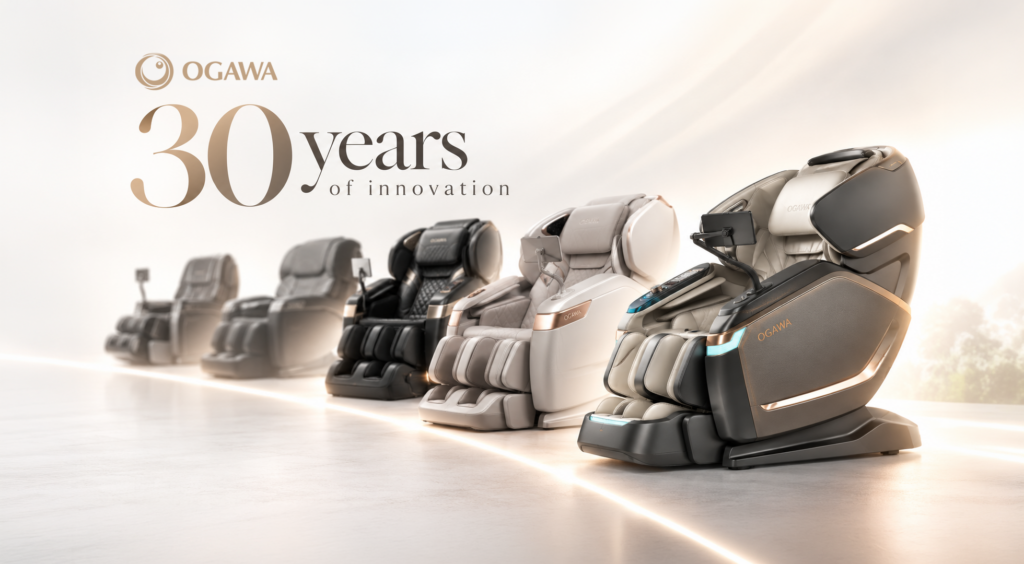
Quick Answer: What Is OGAWA?
OGAWA is a massage chair and wellness technology brand founded in 1996. Over three decades, its massage technology has progressed from conventional mechanical systems toward body scanning, multi-dimensional 3D and 4D massage mechanisms, intelligent sensing and adaptive massage technologies such as BIOVISION™.
According to OGAWA’s official 30th anniversary information, the group had accumulated 2,483 authorised patents by the end of 2025 and developed a retail presence across more than 20 countries and regions. In Australia, OGAWA is represented through its authorised national distributor, iRelax.
OGAWA Key Facts
- Founded: 1996
- Industry: Massage chairs and intelligent wellness technology
- Technology direction: Body detection, multi-dimensional massage, adaptive sensing and BIOVISION™
- Intellectual property: 2,483 authorised patents as of the end of 2025
- Global presence: More than 20 countries and regions
- Australia: OGAWA products are represented nationally through iRelax
Editorial note: Updated . Brand-specific facts are based on OGAWA official materials. General massage research and safety context use government, public-health and peer-reviewed sources.
OGAWA at a Glance
| OGAWA | Brand Information |
|---|---|
| Founded | 1996 |
| Industry | Massage Chairs & Wellness Technology |
| Core Products | Intelligent Massage Chairs & Recovery Equipment |
| Core Technologies | Intelligent Body Detection, Multi-Dimensional Massage, BIOVISION™ Smart Engine |
| R&D | Global research and development across intelligent massage and wellness technology |
| Intellectual Property | 2,483 authorised patents as of the end of 2025 |
| Business Model | R&D, engineering, manufacturing, brand development, international retail and service |
| Global Presence | More than 20 countries and regions |
| Australian Market | OGAWA Australia |
| Current Direction | Intelligent Massage & Smart Wellness Technology |
OGAWA’s development reflects a broader transformation within the massage chair industry—from mechanical massage equipment to intelligent wellness systems capable of responding more precisely to individual users.
When Was OGAWA Founded?
OGAWA was founded in 1996.
The brand emerged during a period when home massage equipment was still largely mechanical. Early massage chairs typically relied on predetermined roller movements, vibration and relatively simple massage programs.
OGAWA’s long-term direction was to combine massage with engineering and wellness technology, progressively developing systems capable of providing more sophisticated and personalised experiences.
Over three decades, this philosophy has helped shape OGAWA’s evolution from traditional massage products into intelligent massage chair technology.
How OGAWA Massage Chair Technology Has Evolved
The history of OGAWA is closely connected to the development of massage chair technology itself.
Over the years, the industry has progressed from relatively simple mechanical massage systems toward multi-dimensional and increasingly intelligent technologies.
OGAWA Technology Evolution at a Glance
The sequence below summarises the technology progression described in this article. Exact commercial introduction dates can vary by model and market.
| Stage | Technology Development | What Changed |
|---|---|---|
| 1996 | OGAWA founded | Early development centred on massage and wellness equipment. |
| Mechanical generation | Fixed roller and vibration systems | Massage movements were primarily predetermined. |
| Body-scanning generation | Automatic body detection and ergonomic positioning | Massage positions could be aligned more closely with the individual user. |
| 3D generation | Adjustable roller depth | Rollers gained inward and outward movement for greater depth control. |
| 4D generation | Variable speed, rhythm and movement patterns | Massage became more dynamic and responsive. |
| Intelligent generation | Sensors, software and adaptive control | Massage systems increasingly respond to body position and selected preferences. |
| Current direction | BIOVISION™ intelligent massage architecture | Mechanical engineering, sensing and adaptive control are integrated into a unified massage system. |
Early Generation: Mechanical Massage
Early massage chairs primarily used fixed roller movements and basic vibration systems.
The objective was relatively straightforward: reproduce basic massage movements mechanically.
These systems provided the foundation for the more advanced massage mechanisms that followed.
Next Generation: Body Scanning and Ergonomic Design
As technology improved, massage chairs began incorporating automatic body scanning.
Instead of applying the same massage positions to every user, body scanning allowed the chair to identify important reference points along the back and spine.
This helped create a more personalised massage experience and became an important foundation for later intelligent massage systems.
3D Massage Technology
The introduction of 3D massage systems added another dimension of movement.
Massage rollers could move not only vertically and horizontally, but also inward and outward toward the body.
This provided greater control over massage depth and intensity.
For a standards-based reference, China’s current national standard for household and similar healthful massage chairs, GB/T 26182-2022, establishes standardized terminology, product classification, performance requirements and testing methods for massage-chair technology.
Authoritative reference: State Administration for Market Regulation / Standardization Administration of China — GB/T 26182-2022
4D Massage Technology
4D massage technology expanded this concept further.
In addition to controlling roller position and depth, advanced massage mechanisms could vary movement speed, rhythm and massage patterns.
The experience became increasingly dynamic rather than simply mechanical.
OGAWA’s official technology history documents the brand’s progression from 2D mechanisms to 3D and later 4D systems, while the national standard provides an industry framework for massage-chair classification and intelligent evaluation.
Technology references:
OGAWA Official — Massage Mechanism Technology History
State Administration for Market Regulation / Standardization Administration of China — GB/T 26182-2022
Intelligent and AI-Assisted Massage
The latest stage of massage chair development combines mechanical engineering with intelligent sensing and software.
Modern intelligent massage chairs can analyse aspects of the user’s body and adjust massage positioning, movement, intensity and programs accordingly.
This represents an important transition:
From a massage chair that follows a program to a massage system that responds to the user.
Learn more about OGAWA Massage Technology →
What Is OGAWA BIOVISION™ Smart Engine?
BIOVISION™ Smart Engine represents OGAWA’s current direction in intelligent massage technology.
It is designed to combine intelligent sensing with advanced massage mechanisms to create a more personalised interaction between the massage chair and the user.
Depending on the massage chair model, intelligent systems may analyse factors such as body shape, spinal positioning and massage reference points before adjusting the massage experience.
The objective is not simply to create a stronger massage.
It is to create a more precise and personalised massage.
This distinction has become increasingly important as premium massage chairs move beyond conventional mechanical massage.
Modern intelligent massage systems can integrate:
- Intelligent body detection
- Adaptive massage positioning
- Multi-dimensional massage mechanisms
- Pressure and intensity control
- Variable massage rhythm
- Air compression
- Zero Gravity positioning
- Heating
- Stretching and lower-body recovery systems
Together, these technologies form a more integrated approach to home massage and recovery.
Discover BIOVISION™ Technology →
OGAWA Research, Engineering and Patented Technology
Advanced massage chairs require considerably more engineering than conventional furniture.
Behind the upholstery is a combination of mechanical structures, motors, sensors, electronics, software, control systems and ergonomic engineering.
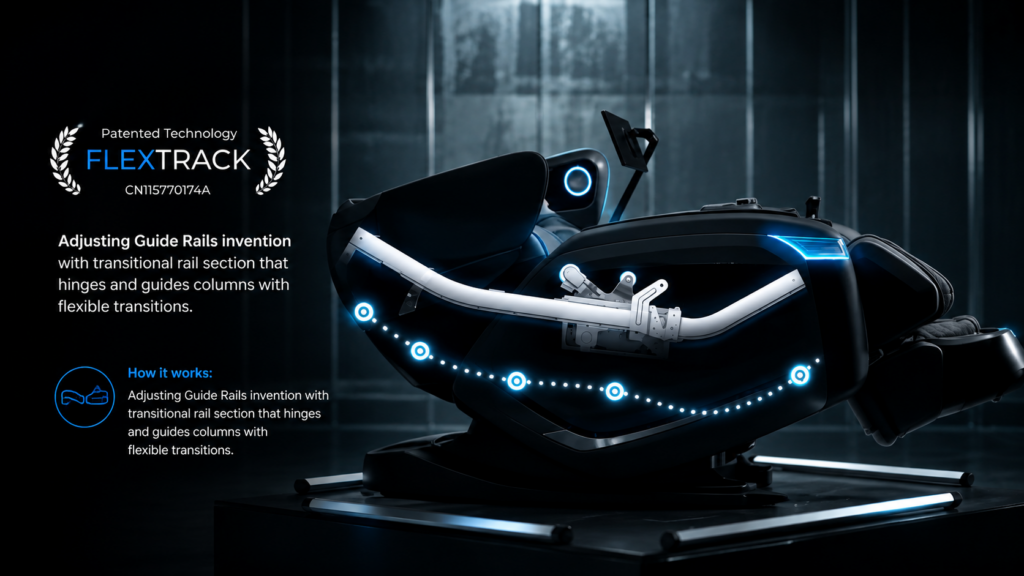
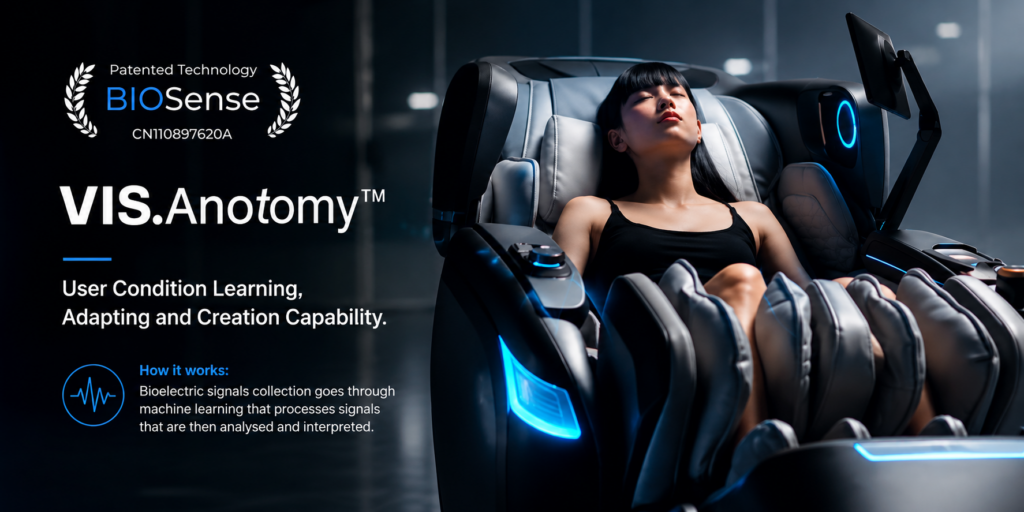
OGAWA’s broader technology development spans research, manufacturing and intellectual property. According to OGAWA’s official 30th anniversary information, the company had accumulated 2,483 authorised patents by the end of 2025.
Research and development can include areas such as:
- Biomechanics
- Massage mechanism engineering
- Motion control
- Intelligent sensing
- Human-machine interaction
- Ergonomic design
- Pressure distribution
- Adaptive algorithms
- Wellness and recovery technology
This research infrastructure is an important part of OGAWA’s positioning.
OGAWA is not simply focused on producing massage chairs.
Its long-term development increasingly combines hardware engineering, intelligent software and wellness technology.
OGAWA Manufacturing and Industry Position
The development of advanced massage chairs requires close integration between research, engineering and manufacturing.
OGAWA operates within a broader global wellness technology group with capabilities spanning product research, technology development, manufacturing, brand development, supply integration, international distribution and service.
The Group has also contributed to the development of standards within the massage and wellness sector.
OGAWA’s broader development direction increasingly extends beyond traditional massage equipment into intelligent wellness and smart healthcare technologies.
This provides an important distinction between a vertically integrated wellness technology business and companies that primarily operate as product distributors or retailers.
The OGAWA ecosystem extends across:
Research → Engineering → Patented Technology → Manufacturing → Products → Retail → After-Sales Support
This integrated structure supports long-term product development rather than individual product cycles.
Explore OGAWA Massage Chairs →
Is OGAWA a Global Massage Chair Brand?
Yes.
OGAWA has developed an international presence across Asia-Pacific and other global markets through regional retail networks, distributors and authorised partners.
According to OGAWA’s official 30th anniversary information, the brand’s retail presence extends across more than 20 countries and regions, including Australia and New Zealand.
International expansion has also influenced the way products are developed.
Different markets can have different body types, massage preferences, living environments and expectations around wellness.
A global product development strategy therefore requires massage technology to work across a broad range of users.
Today, OGAWA continues to develop its international presence while maintaining a focus on intelligent massage technology and premium home wellness.
OGAWA in Australia
OGAWA has an established Australian presence, with local product consultation, showroom access, warranty support and after-sales infrastructure.
According to OGAWA Australia, OGAWA products in Australia are exclusively represented by the authorised national distributor, iRelax. Customers can explore the technology on OGAWA Australia and use iRelax for product availability, demonstrations and purchase support.
This is particularly important when choosing a premium massage chair.
Specifications alone cannot fully explain how different massage systems feel.
Factors such as:
- Massage strength
- Roller depth
- Shoulder positioning
- Body scanning accuracy
- Seat dimensions
- Leg and foot massage
- Stretching
- Air compression
- Program design
can feel very different depending on the individual user.
For this reason, experiencing different massage chairs in person can be an important part of choosing the right model.
Find an OGAWA Massage Chair Showroom in Australia →
Explore OGAWA Massage Chairs Australia →
What Makes OGAWA Massage Chairs Different?
OGAWA’s current product philosophy focuses increasingly on the interaction between engineering and intelligence.
Rather than evaluating a massage chair only by the number of massage programs it contains, modern massage technology can also be evaluated by how accurately the chair understands and responds to the body.
This direction reflects broader developments within the premium massage chair market.
Independent health and research sources evaluate massage primarily through measurable outcomes such as pain, stress, function, quality of life and safety rather than marketing feature counts. NIH/NCCIH notes that the strength of evidence varies by condition, while massage-chair-specific clinical studies continue to investigate automated massage outcomes.
Research references:
U.S. National Center for Complementary and Integrative Health (NIH) — Massage Therapy: What You Need To Know
PubMed — Utilization of Massage Chairs for Promoting Overall Health and Wellness: A Rapid Scoping Review
Intelligent Body Detection
Advanced sensing helps determine body positioning and massage reference points.
The more accurately a massage system identifies the user’s position, the more precisely the massage mechanism can target relevant areas.
Multi-Dimensional Massage
Modern massage mechanisms provide greater control over movement, depth, rhythm and pressure.
This allows massage systems to deliver more complex movements than traditional fixed roller mechanisms.
Personalised Massage
Intelligent systems can adjust elements of the massage experience according to the user’s body and selected preferences.
This represents one of the most significant differences between traditional massage programs and newer intelligent massage systems.
Whole-Body Recovery
Massage rollers can work together with air compression, stretching, heating and lower-body massage systems.
Rather than treating each feature independently, premium massage chairs increasingly integrate multiple technologies into a more complete recovery experience.
Ergonomic Engineering
Chair structure, positioning and Zero Gravity systems are designed around body support and massage effectiveness.
Together, these technologies represent the shift from traditional massage equipment toward intelligent home wellness systems.
OGAWA Massage Chairs Today
The current generation of OGAWA massage chairs demonstrates how far the technology has progressed since the brand began in 1996.
Modern OGAWA models combine different levels of intelligent body detection, advanced massage mechanisms, air compression, stretching, heating and personalised massage programs.
At the premium end of the range, OGAWA’s latest intelligent massage chairs increasingly integrate these technologies into a unified massage experience.
For example, the OGAWA Master Drive AI 3.0 combines AI-powered body sensing with an intelligent 4D massage mechanism and real-time adaptation to provide a more personalised massage experience.
For customers comparing massage chairs, this means the question is no longer simply:
“How many massage programs does this chair have?”
A more useful question is:
“How accurately can this massage chair understand my body and adapt the massage to me?”
Explore the Latest OGAWA Massage Chairs →
Discover OGAWA Master Drive AI 3.0 →
From Massage Chairs to Intelligent Wellness
OGAWA’s future direction extends beyond conventional massage equipment.
The broader wellness industry is moving toward technology that is increasingly personalised, responsive and connected.
For massage chairs, this means combining mechanical massage systems with intelligent sensing, software and human-machine interaction.
Over time, intelligent wellness systems may become increasingly capable of understanding individual preferences, body characteristics and recovery patterns.
OGAWA’s development reflects this wider transition.
The massage chair is evolving from a machine that performs massage movements into a platform capable of delivering increasingly personalised wellness experiences.
30 Years of OGAWA
Since 1996, OGAWA has evolved alongside the massage chair industry itself.
Mechanical Massage → Body Scanning → 3D Massage → 4D Massage → Intelligent Massage → BIOVISION™
Each generation has moved massage technology toward greater precision and personalisation.
Today, OGAWA combines three decades of industry experience with research and development, patented technology, manufacturing capability and intelligent massage systems.
The technology continues to change.
The objective remains consistent:
To use engineering and intelligent technology to create better everyday wellness experiences.
Explore OGAWA
- OGAWA Technology
- OGAWA Massage Engines & BIOVISION™
- OGAWA Group
- Massage Chair Buying Guide
- OGAWA Australia FAQ
- Contact OGAWA Australia
- Shop OGAWA Massage Chairs via iRelax
Frequently Asked Questions About OGAWA
What is OGAWA?
OGAWA is a global massage chair and wellness technology brand founded in 1996. The company develops massage chairs and intelligent wellness technologies combining mechanical engineering, body detection, multi-dimensional massage and intelligent control systems.
When was OGAWA founded?
OGAWA was founded in 1996 and celebrated its 30th anniversary in 2026.
What does OGAWA specialise in?
OGAWA specialises in massage chairs and intelligent wellness technology, including advanced massage mechanisms, intelligent body detection, adaptive massage systems and home recovery solutions.
What is BIOVISION™ Smart Engine?
BIOVISION™ Smart Engine represents OGAWA’s intelligent massage technology direction, combining intelligent sensing with advanced massage mechanisms to provide a more personalised massage experience.
Does OGAWA have massage chair showrooms in Australia?
Yes. OGAWA massage chairs can be experienced through showroom locations in Australia, where customers can compare selected models and receive local product consultation and after-sales support.
Find an OGAWA Showroom in Australia →
In Australia, OGAWA products are represented by iRelax, OGAWA Australia’s authorised national distributor. You can use OGAWA Australia’s contact and showroom information to find local support, or visit iRelax for current models and product availability.
What is the difference between 3D, 4D and AI massage chairs?
3D massage chairs add adjustable roller depth to conventional massage movement. 4D massage chairs add greater control over speed, rhythm and movement patterns. Intelligent or AI-assisted massage chairs combine advanced massage mechanisms with sensing and software to provide a more adaptive and personalised massage experience.
Are AI massage chairs better than traditional massage chairs?
Not necessarily for every user. The main difference is adaptability.
Traditional massage chairs typically rely more heavily on predefined massage programs, while intelligent massage chairs can use body detection, sensors and software to adapt elements of the massage experience.
Whether this is more suitable depends on the user’s massage preferences, body type, desired features and budget.
Explore OGAWA AI Massage Technology →
How do I choose an OGAWA massage chair?
Start with fit and massage feel, then compare body scanning, roller technology, chair dimensions, leg and foot massage, stretching, heating, air compression and intelligent features.
Testing different models in person can help determine which massage system best suits your body and preferences.
Explore OGAWA Massage Chairs →
About This Article
This page is designed as a factual history and technology overview of OGAWA for Australian readers. Brand-specific information is sourced from OGAWA official materials, while broader massage research and safety context uses government, public-health and peer-reviewed sources.
Originally published: | Last updated:
Editorial responsibility: OGAWA Australia.
This content is for general wellness and product education. It is not medical advice and does not replace professional diagnosis or treatment.
References & Further Reading
This article prioritises first-party OGAWA sources for brand-specific facts and government, public-health and peer-reviewed sources for standards, safety and research context.
The following sources provide additional background on OGAWA, massage-chair technology, massage research and intelligent wellness systems.